CirBioWaste Third Online Training on Community Composting for Improved Bio-Waste Management
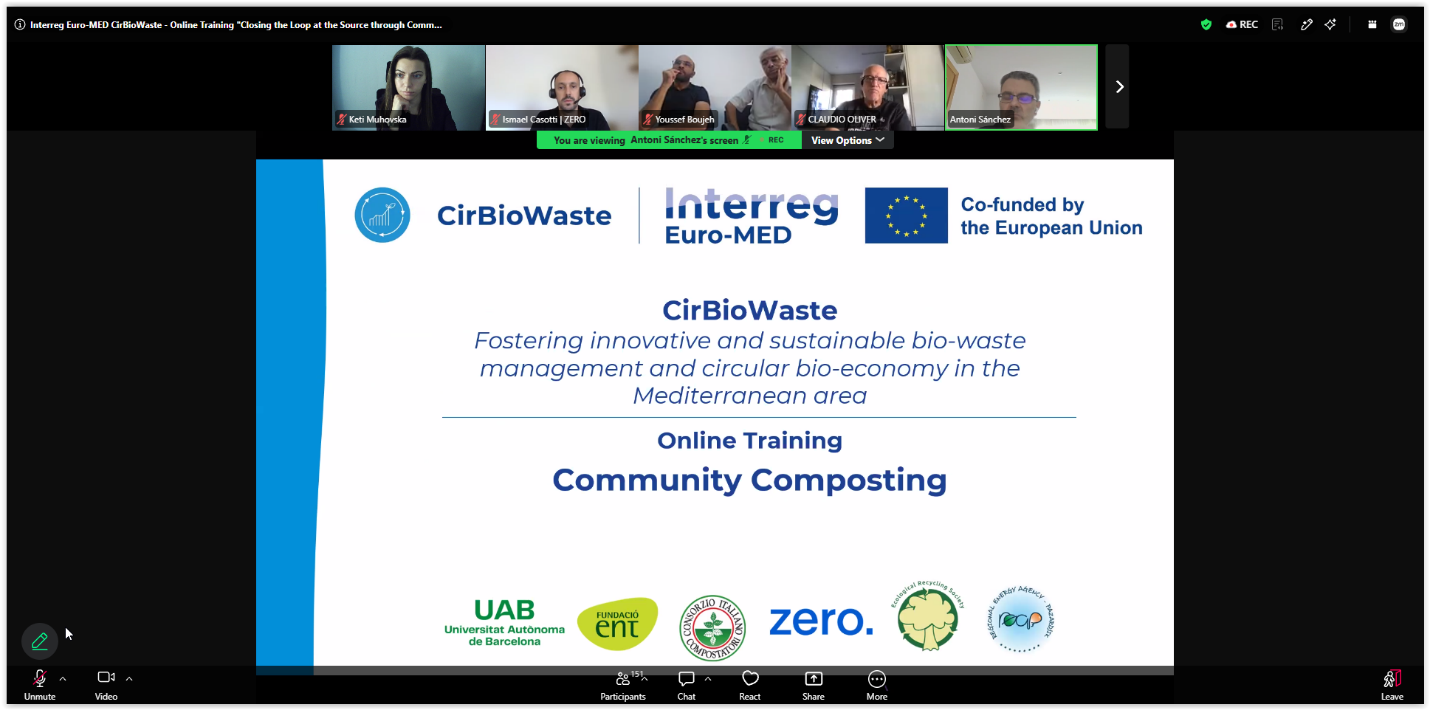
The Third Online Training, “Closing the Loop at the Source through Community Composting”, organised within the frame of the CirBioWaste project (Fostering innovative and sustainable bio-waste management and circular bio-economy in the Mediterranean area), co-funded by the Interreg Euro-MED Programme, took place on 9 October 2026. The event continued the project’s capacity-building activities, focusing on the benefits of community composting as a sustainable approach to improving bio-waste management in the Mediterranean region.
The online meeting brought together around 180 participants, including municipal representatives, waste management professionals, project partners, and key stakeholders from several Mediterranean countries. The training focused on the implementation of community composting, highlighting its potential to manage bio-waste on a local level, encouraging citizen participation and promoting innovative sustainable economy.
The event opened with a welcome speech by the lead partner of the project, the Autonomous University of Barcelona (UAB), who introduced the concept of community composting and its role in sustainable bio-waste management. An overview of the CirBioWaste project was also provided, presenting its main objectives, the cooperation between project partners and the progress made in identyfying and promoting practical solutions for efficient bio-waste management.
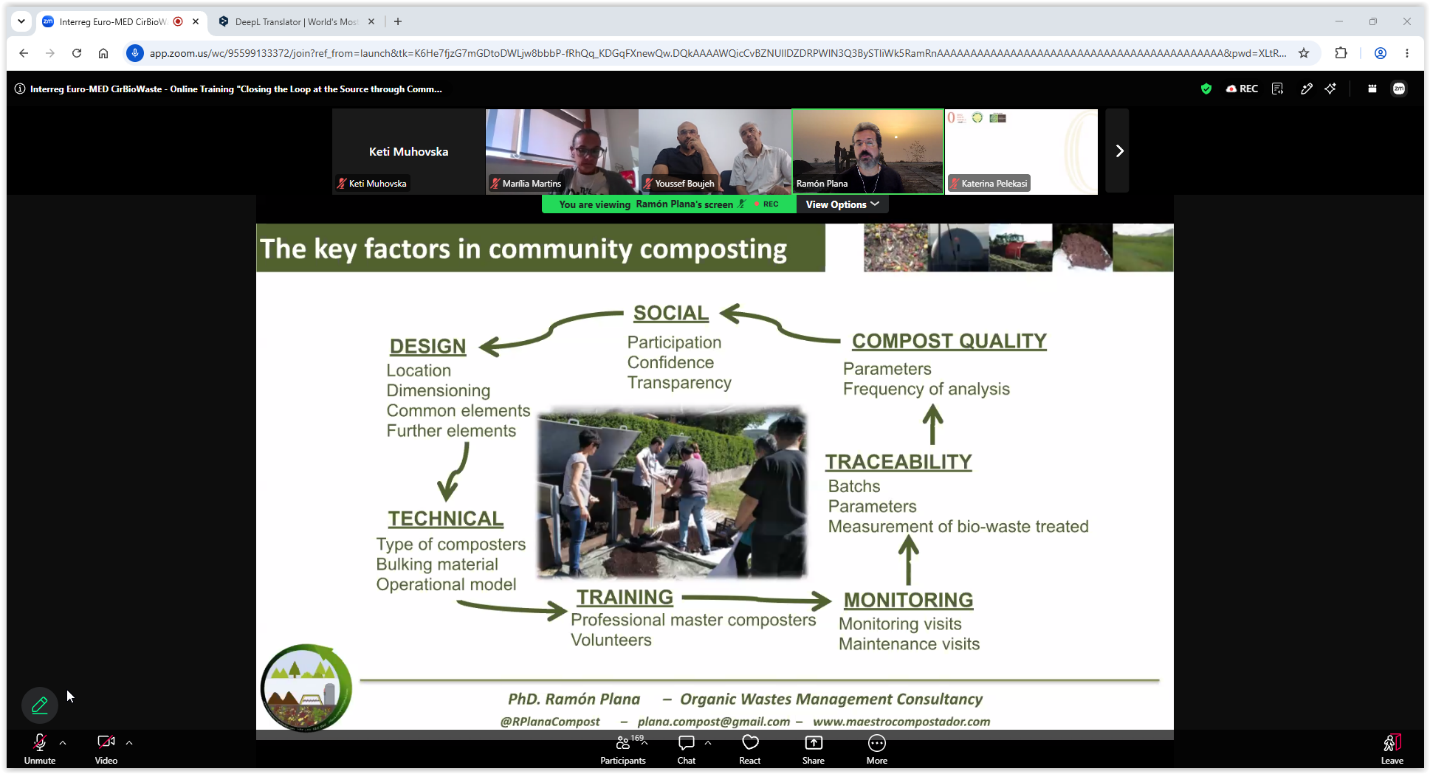
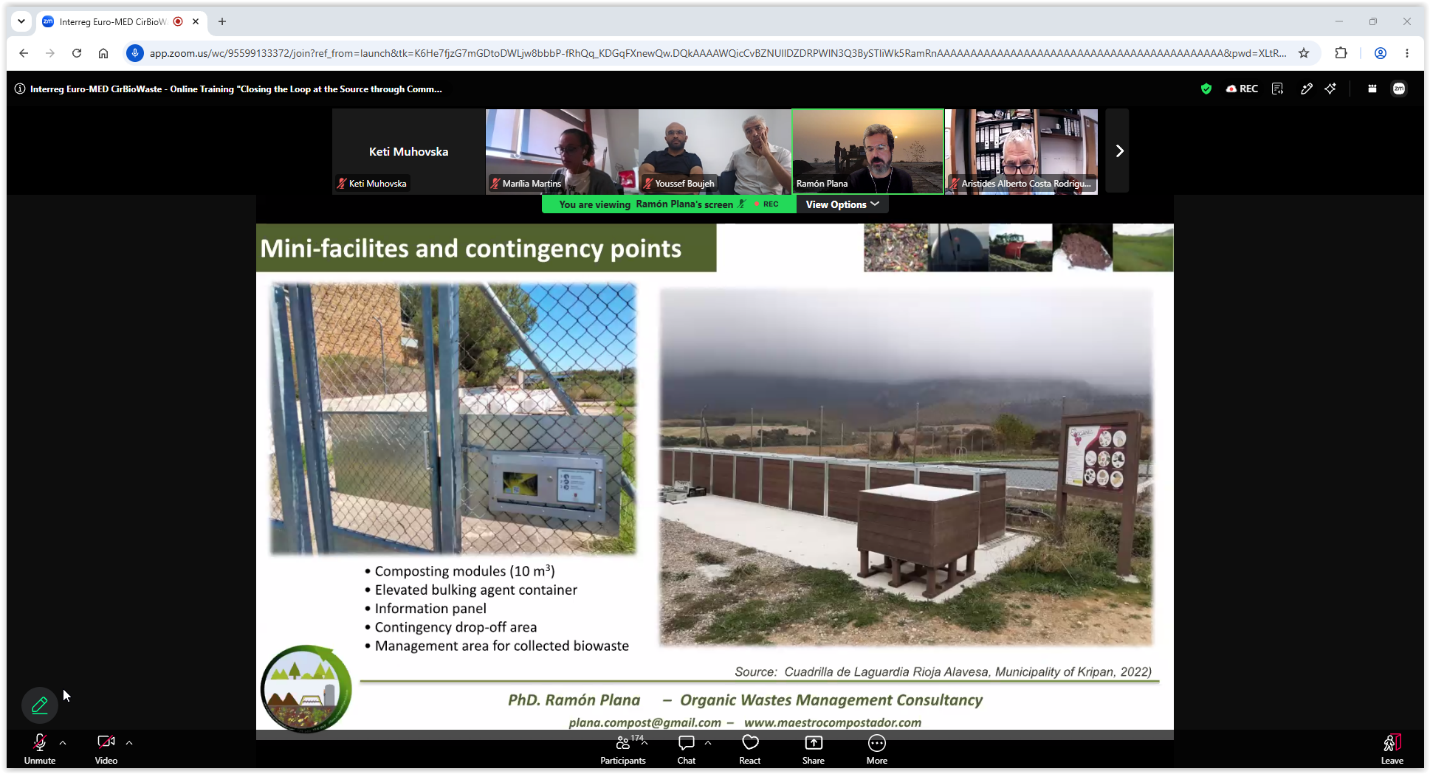
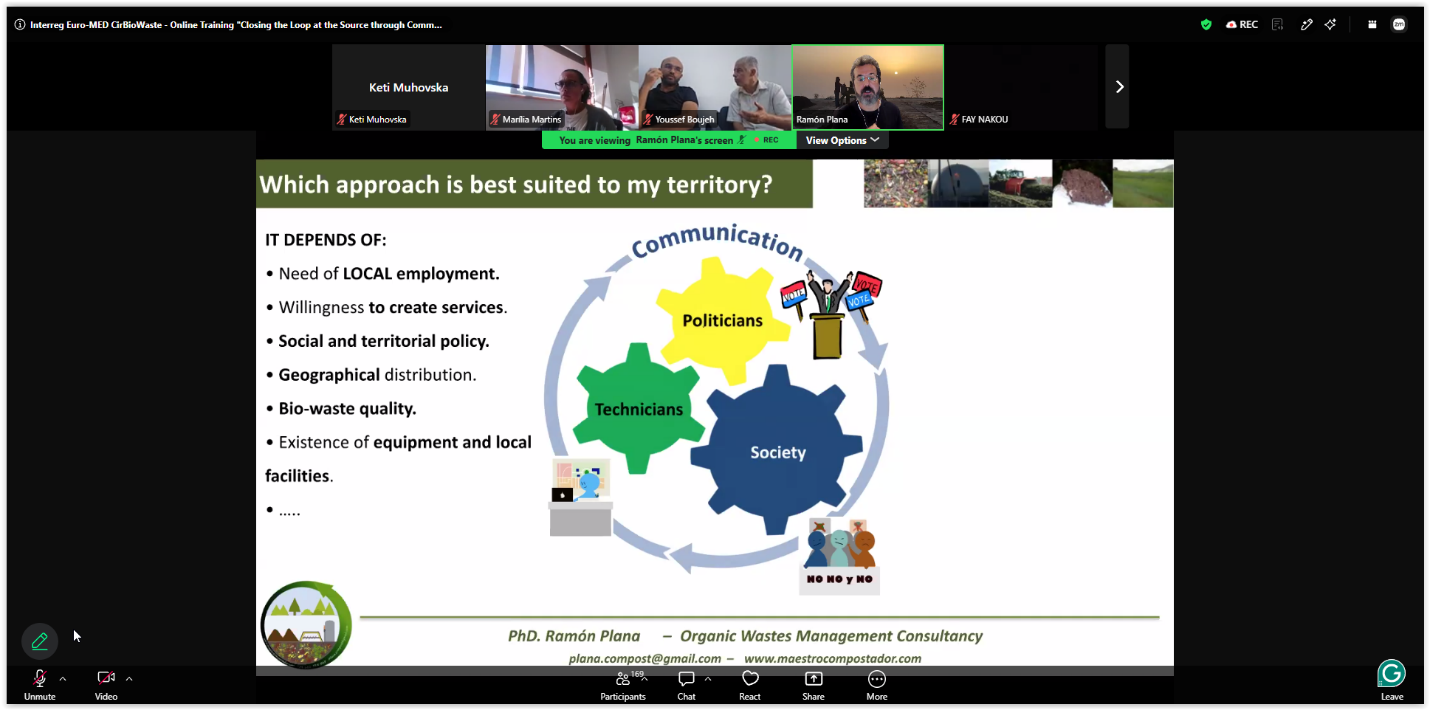
The training continued with a presentation by an independent environmental consultant on decentralized composting, emphasising the importance of composting bio-waste where it is generated and exploring the benefits of local composting solutions.
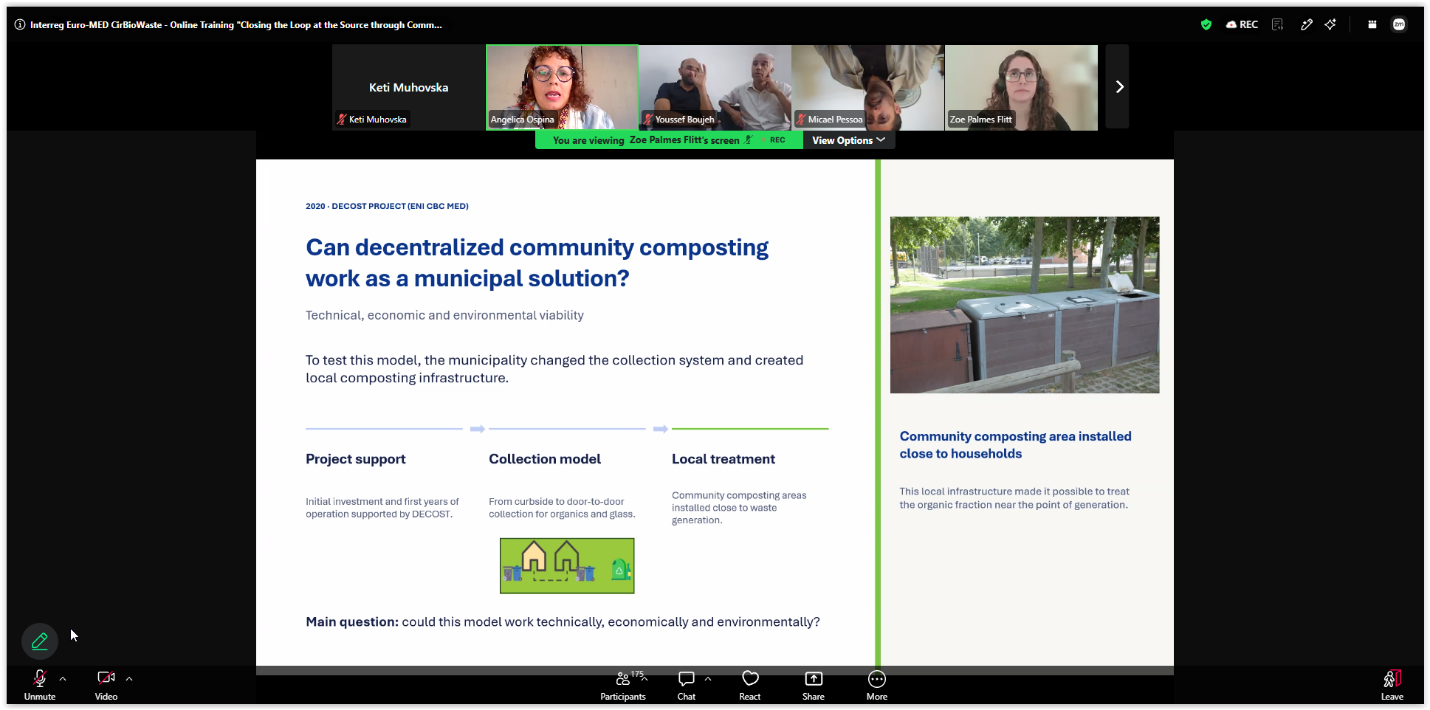
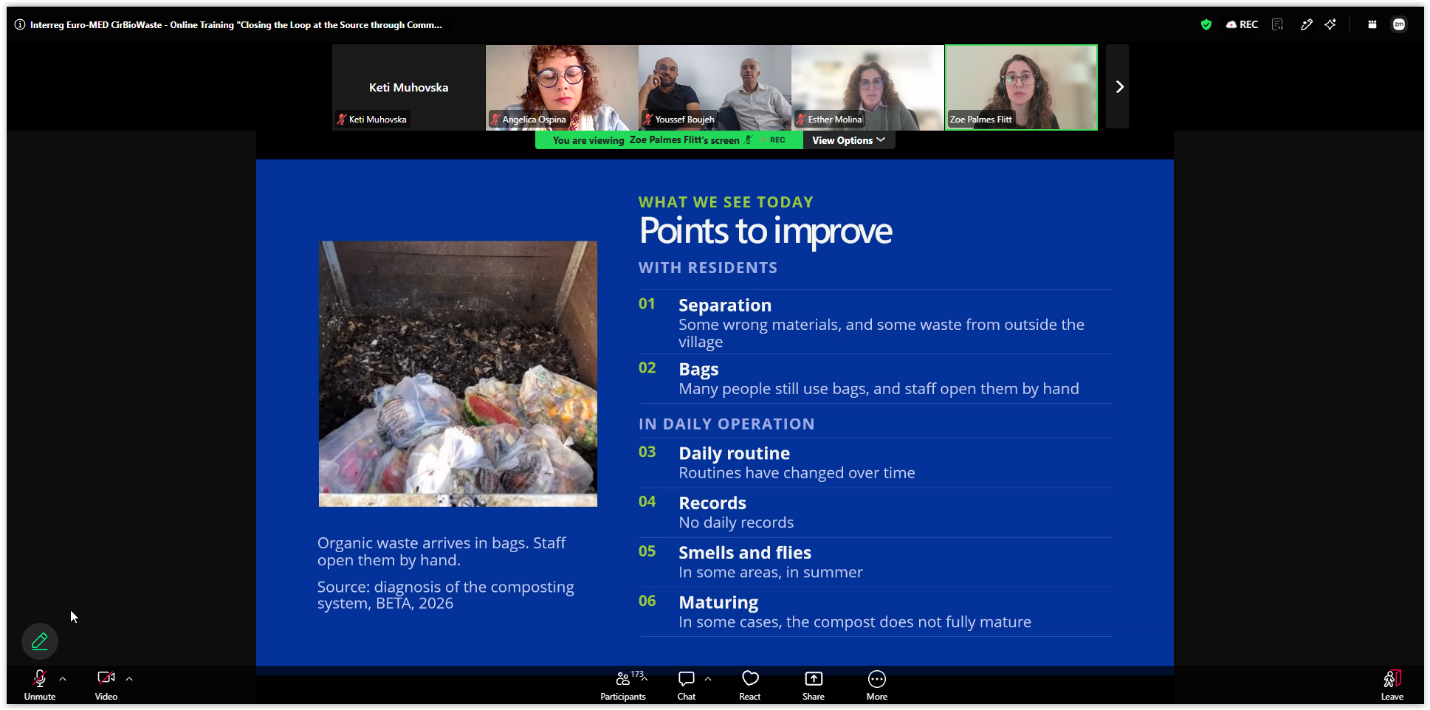
The session also featured a presentation by representatives of the BETA Research Center, who presented community composting at the municipal level through the example of Masies de Roda and the MEDWISE project, showcasing practical approaches to implementing community composting initiatives in local contexts.
Following the presentations, participants had the opportunity to ask questions and exchange opinions on the challenges and benefits associated with community and decentralized composting.
The event concluded with parallel break-out sessions in Spanish and Portuguese, providing an opportunity to explore specific experiences and good practices. The Spanish session was focused on the topic of community composting on university campuses, while the Portuguese speakers addressed the options for community composting in local municipalities.
Through these activities, the project continues to strengthen the knowledge exchange and uptake of innovative, locally adapted solutions for sustainable bio-waste management across the Mediterranean area.
Follow us on social media to stay updated on the project’s progress and outcomes: